

Discover the art of feminine style with Donna Karan women’s clothing. Learn about the designer’s approach to creating beautiful, wearable pieces for women, where her legacy stands today, and the brands that carry her name forward.
Table of Contents
The average reading time is 17 minutes. The article was last updated on 03/07/2026.
Quick Facts
| Fact | Detail |
|---|---|
| Full name | Donna Ivy Karan (née Faske) |
| Born | October 2, 1948, Forest Hills, Queens, New York |
| Education | Parsons School of Design |
| Nickname | “DK” |
| First head-designer role | Anne Klein, appointed at age 25 |
| Own label founded | 1984 (debuted Fall 1985 with “Seven Easy Pieces”) |
| DKNY founded | 1989, as a younger, lower-priced line inspired by her daughter Gabby |
| Left day-to-day design role | 2015, to focus on Urban Zen |
| Current ventures | Urban Zen (owned by Karan) and the Urban Zen Foundation |
| Brand ownership today | Donna Karan and DKNY are owned by G-III Apparel Group |
Early Life and Formative Years: The Tailor’s Daughter
To understand Donna Karan’s innate grasp of fit, proportion, and women’s needs, one must look at her roots. She was born Donna Ivy Faske on October 2, 1948, in the Forest Hills neighborhood of Queens, New York. She was essentially born into the fashion industry. Her mother, Helen “Queenie” Faske, was a showroom model and saleswoman in the bustling heart of New York’s garment district. Her father, Gabriel Faske, was a custom tailor and haberdasher who tragically passed away when she was only three years old.
Raised by her mother alongside her older sister, Gail, in Woodmere, Long Island, Karan was constantly surrounded by fabrics, pins, and the fast-paced energy of fashion. From a very young age, she understood how garments were constructed from the inside out—a technical understanding inherited from her father’s bespoke tailoring background. This deep-seated knowledge naturally propelled her toward a career in design, leading her to enroll at the prestigious Parsons School of Design in New York City.
The Anne Klein Era: Mentorship and Leadership
While still a student at Parsons, Karan secured a highly coveted summer job working under American sportswear pioneer Anne Klein. Klein, known for her pragmatic, mix-and-match separates, recognized Karan’s raw talent and relentless drive. Karan eventually left Parsons before graduating to accept a full-time position as an assistant designer at the brand.
In 1974, tragedy struck when Anne Klein passed away from breast cancer. In a bold move, the company’s ownership appointed the 25-year-old Karan as head designer, alongside her former Parsons classmate Louis Dell’Olio. Over the next decade, Karan and Dell’Olio successfully expanded the Anne Klein empire. They maintained the brand’s reputation for elevated American sportswear and even won the prestigious Coty American Fashion Critics’ Award.
During her tenure, Karan pioneered the concept of the \”bridge line\”—a diffusion collection offering designer aesthetics at a more accessible price point—by launching Anne Klein II in 1982. This keen understanding of market demographics and women’s diverse lifestyle needs laid the crucial groundwork for her eventual solo career.
A brief overview of Donna Karan’s Background and Career in fashion design
Donna Karan is undeniably one of the most influential American fashion designers of the last half-century. Building upon her massive success at Anne Klein, Karan and her late husband, sculptor and artist Stephan Weiss, were offered the rare opportunity to start their own business in 1984. The venture was backed by Takihyo LLC, the Japanese company that owned Anne Klein.
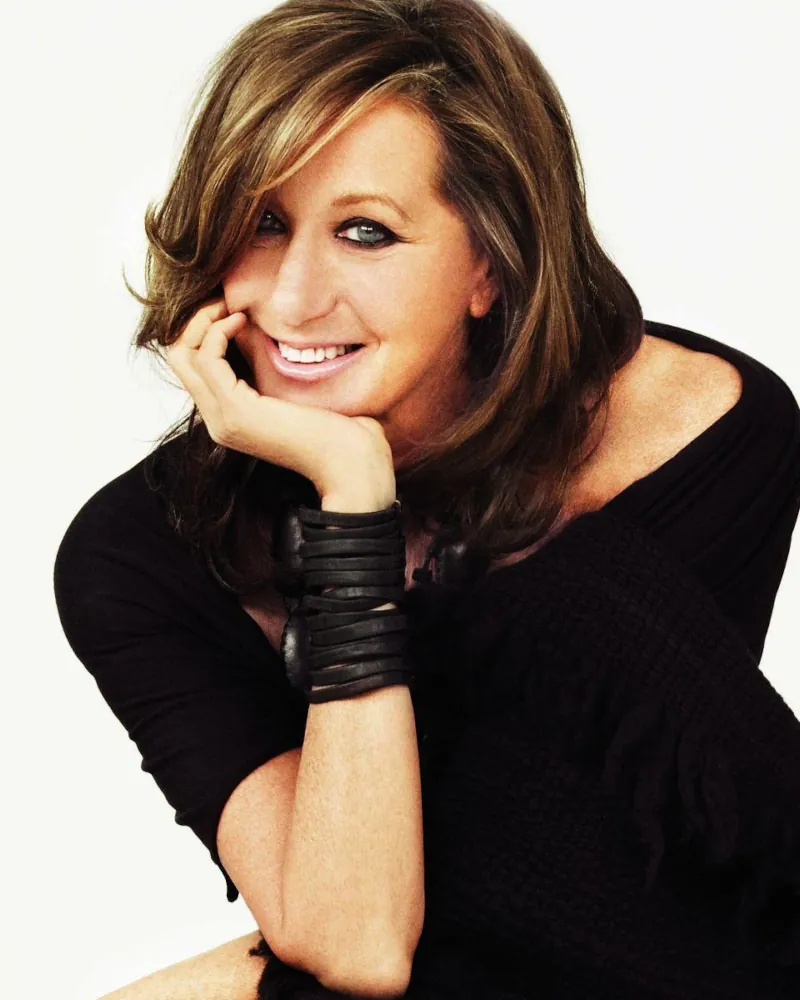
The Donna Karan New York label officially debuted for the Fall 1985 season with her now-famous “Seven Easy Pieces” concept. It was an immediate sensation. The company went public in 1996, transforming Karan from an industry insider into a global household name. In 2001, her company, Donna Karan International, was purchased by the French luxury conglomerate LVMH.
In 2015, Karan stepped back from her day-to-day role at Donna Karan International to focus on Urban Zen, her holistic lifestyle brand and foundation. She has described the move as one of the hardest decisions of her career. LVMH subsequently sold the Donna Karan and DKNY brands; today they belong to G-III Apparel Group.

In this candid memoir, featuring a foreword by Barbra Streisand, Donna Karan shares intimate details about her childhood, her four-plus decades in fashion, her two marriages, motherhood, and her ongoing quest for self-acceptance and spiritual peace.
Check the book at amazon.com.
Career Timeline
| Year | Milestone |
|---|---|
| 1948 | Born in Forest Hills, Queens, New York |
| ~1968 | Begins working under Anne Klein after studying at Parsons |
| 1974 | Becomes head designer of Anne Klein, age 25, alongside Louis Dell’Olio |
| 1984 | Launches her own label with husband Stephan Weiss, backed by Takihyo LLC |
| 1985 | Debuts Fall collection built on the “Seven Easy Pieces” concept |
| 1989 | Launches DKNY as a younger, more affordable diffusion line |
| 1992 | Launches Donna Karan Beauty (fragrance) and DKNY Men |
| 1996 | Donna Karan International goes public |
| 2001 | LVMH acquires Donna Karan International |
| 2004 | DKNY Be Delicious fragrance is launched, becoming a global bestseller |
| 2007 | Founds the Urban Zen Foundation, focusing on wellness, education, and culture |
| 2015 | Karan steps down as chief designer to focus on Urban Zen |
| 2016 | LVMH sells Donna Karan and DKNY to G-III Apparel Group for $650 million |
| 2016 | Receives the CFDA Founder’s Award in Honor of Eleanor Lambert |
| 2018 | G-III forms a joint venture to run Donna Karan/DKNY in China |
| 2025 | Hailey Bieber named DKNY’s global brand ambassador |
| 2026 | Urban Zen continues its annual Holiday Marketplace and “Soulful Economy” initiatives |
Explanation of the focus on the art of feminine style in her women’s clothing designs
One of the defining traits of Karan’s design philosophy is what she calls “the art of feminine style.” Her clothing favors sleek, sophisticated lines that flatter the body without sacrificing comfort — a combination she has often said was missing from women’s tailoring when she started. In the 1980s, female executives were often told to \”dress for success\” by wearing boxy, masculine power suits complete with exaggerated shoulder pads and floppy bow ties. Karan offered a sensual, fluid alternative.
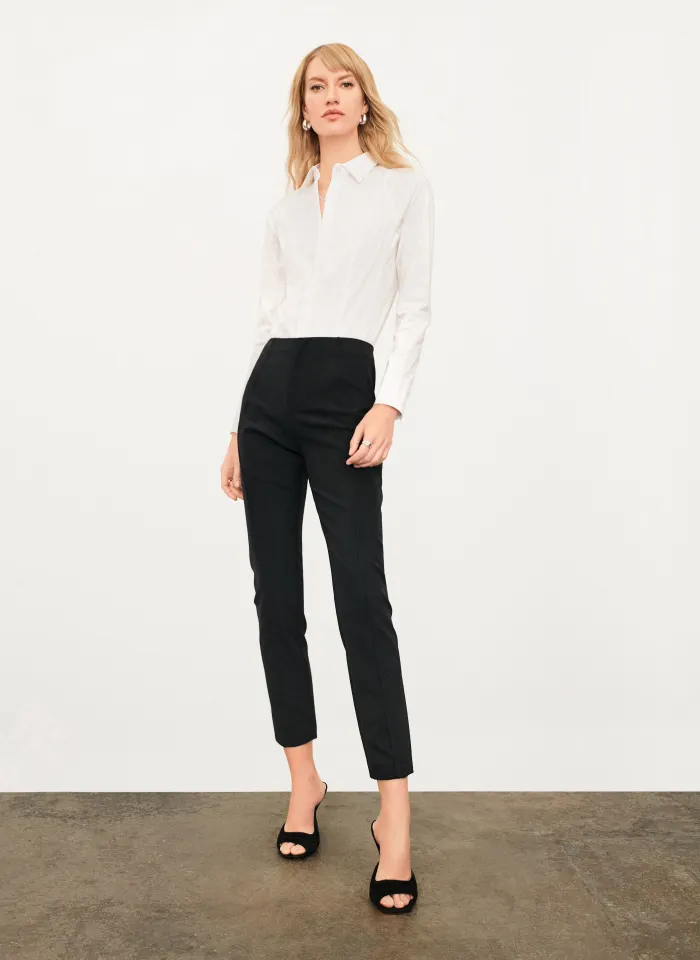
Rather than chasing trends, Karan built her reputation on clothes designed to outlast a single season — a strategy that helped cement “Seven Easy Pieces” as one of the most quoted concepts in American ready-to-wear.
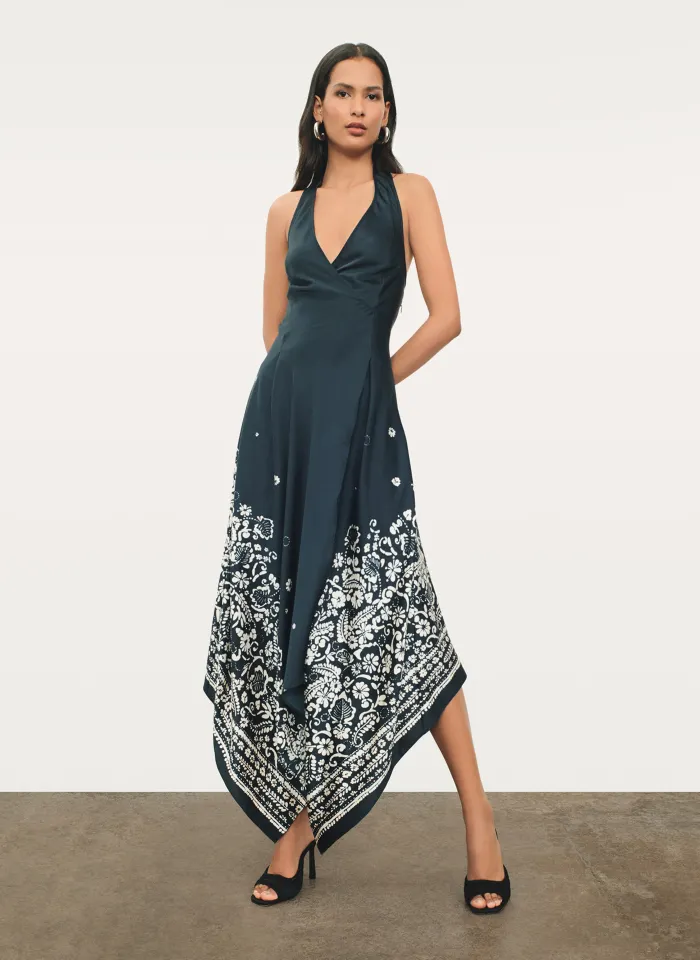
From Donna Karan’s new arrivals: the Halter dress. Check it at dkny.com.
When I first started designing, all women were dressed like men, and I said, ‘Hey, guys, let’s be women, put the two together – it’s not either/or. Let’s celebrate our bodies. Our bodies are different.’
— Donna Karan
The Seven Easy Pieces
The concept that launched her label is best understood as a modular wardrobe system. Frustrated by the chaotic nature of her own closet, Karan sought to simplify the modern working woman’s morning routine. In her own recollection of designing the original collection, the pieces were meant to function as an entire, interchangeable wardrobe that could fit into a single overnight bag.
| # | Piece | Purpose |
|---|---|---|
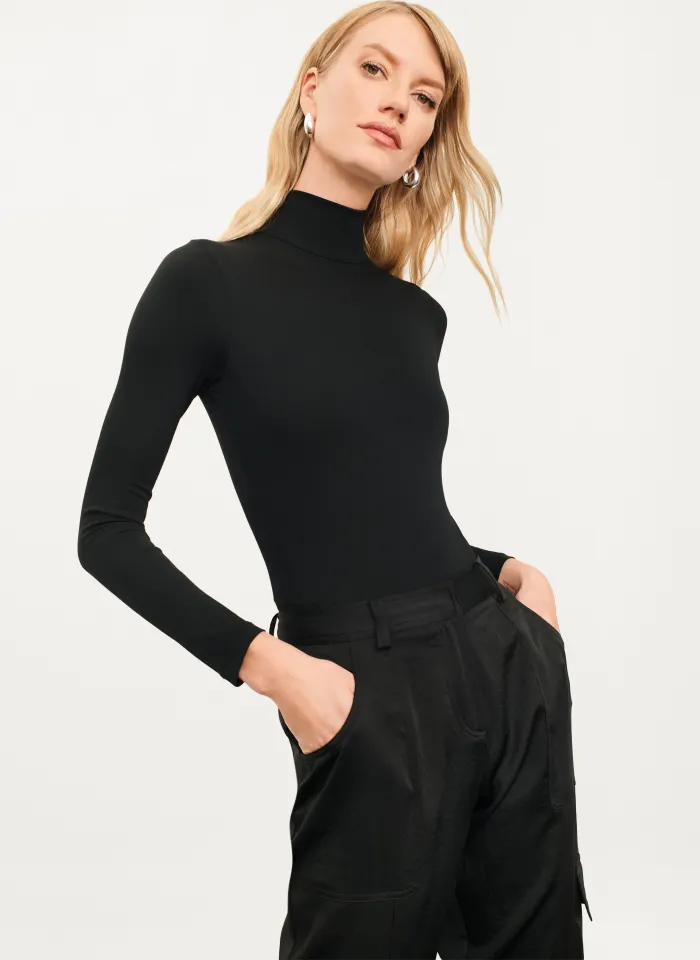
| 1 | Bodysuit | The absolute foundation layer for tailored looks. Snapping at the crotch, it smoothed the silhouette and eliminated the messy, untucked blouses of the era. |
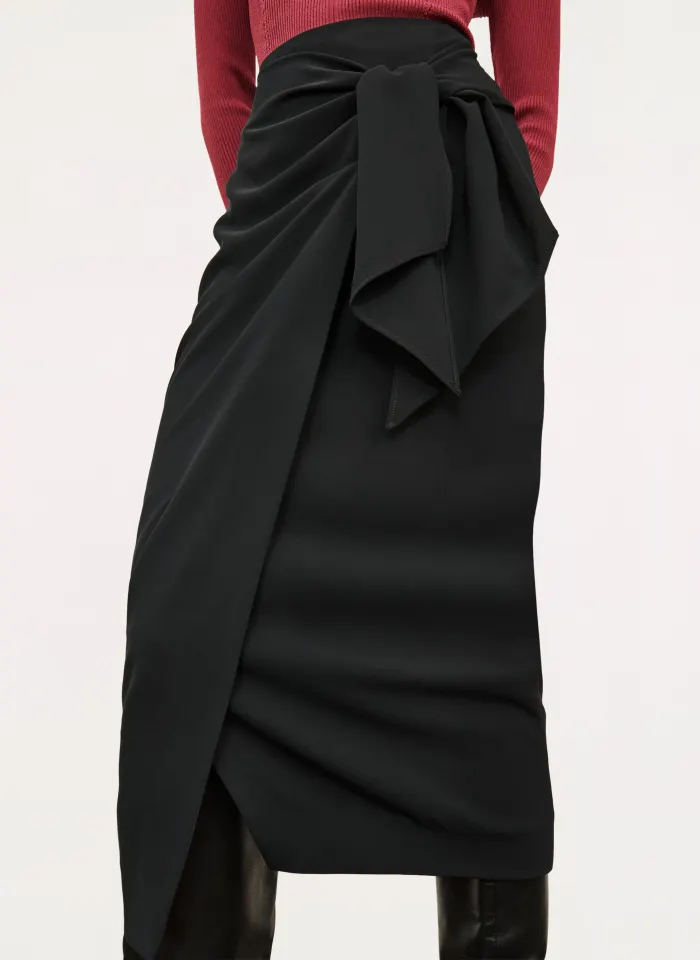
| 2 | Wrap and tie skirt | Transitions effortlessly from day to evening. Inspired by the sarong, it adjusted perfectly to a woman’s fluctuating shape. |
| 3 | Scarf | Karan’s “most important” accessory piece. It could be draped around the shoulders for drama, tied at the waist, or worn as a hijab. |
| 4 | Blazer | Tailored structure, a direct nod to her father, the custom tailor. It provided authority without stiffness. |
| 5 | Sweater | A luxurious cashmere comfort layer, offering soft, tactile warmth. |
| 6 | Suede and leather jacket | The essential outerwear layer, providing a tough, New York-centric edge to offset the soft draping of the rest of the capsule. |
| 7 | Black jersey long skirt | Could be wrapped, tied, and reshaped for multiple occasions, bringing an element of dramatic eveningwear that was still entirely comfortable. |
Discussion of Donna Karan’s approach to designing clothing for women
Karan’s approach centers on flattering the female form without sacrificing ease of movement. Tailored cuts, thoughtful seaming, and a focus on how a garment feels — not just how it photographs — are recurring themes across her collections. She famously designs by wrapping and draping fabric directly onto the female body, often using herself or a fit model, rather than sketching on paper.

She’s also credited with popularizing pieces that had a lasting influence on how women dress for work, including the “cold shoulder” cutout and the modern bodysuit-as-basic. In interviews, she has traced her design instincts back to formative moments like the 1973 Battle of Versailles runway event and her early years working alongside jewelry designer Robert Lee Morris, whose sculptural brass pieces perfectly complemented her minimalist garments.
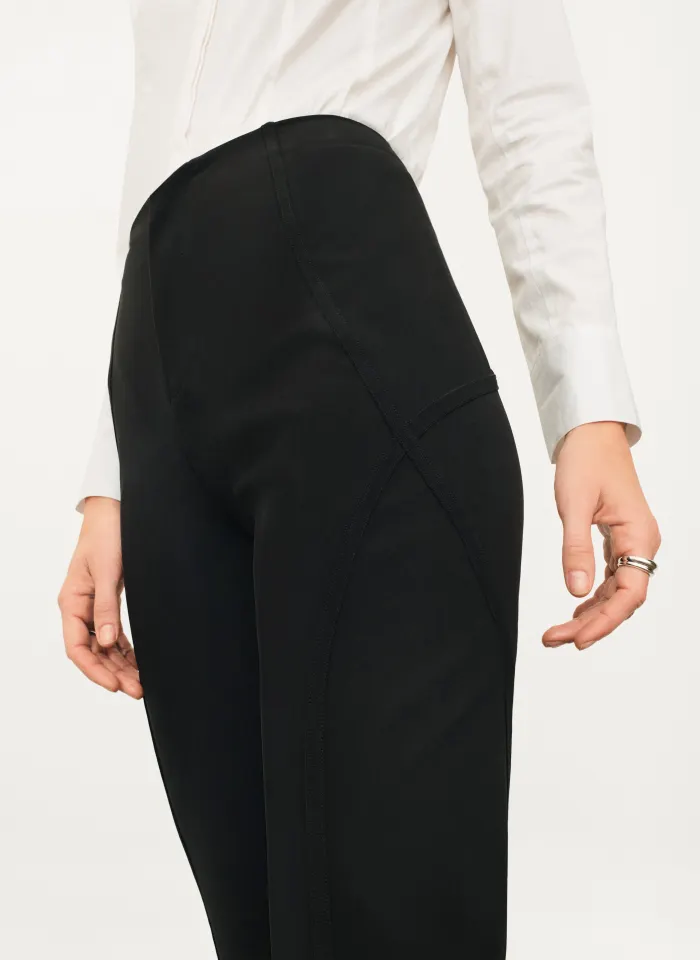
Karan has also been vocal about materials — favoring high-quality, durable fabrics that hold their shape and last well beyond a single season, a stance that predates today’s broader push toward sustainable fashion.
Insight into the inspiration and influences behind her collections
Karan draws inspiration from several consistent sources:
- New York City — the energy, diversity, and rapid pace of her hometown show up in the modernity, black palettes, and urban sophistication of her silhouettes. New York is inherently embedded in her DNA and the name of her brands.
- Art and architecture — clean lines, geometric shapes, and asymmetrical cuts reflect her admiration of modern sculpture, painting, and photography.
- Nature and the body — natural forms, the fluid movement of water, and organic shapes heavily inform her draping and construction techniques.
- Global textile traditions — through Urban Zen, she has worked extensively with artisans in Haiti, Bali, and Thailand, reinterpreting traditional garments and handcrafted techniques for the modern consumer.
- The woman wearing the clothes — Karan has repeatedly said she designs around how a garment makes a woman feel. Her goal has always been to solve a woman’s problems through design.
The Launch of DKNY: Capturing the Spirit of New York
While the main Donna Karan New York line catered to affluent executive women, Karan soon realized a gap in her empire. Inspired by her daughter Gabby’s wardrobe—and her own frustrating inability to find the perfect pair of everyday jeans—she launched DKNY (Donna Karan New York) in 1989.
DKNY was the younger, more accessible, street-smart sister to the main line. It captured the vibrant, unstoppable pulse of New York City street style. The brand famously utilized the New York City skyline and yellow taxi cabs in its marketing imagery, solidifying an aesthetic that was simultaneously aspirational and grounded. DKNY became a massive commercial triumph, eventually expanding into denim, activewear, children’s clothing, and highly successful accessories, making the “DKNY” logo an omnipresent symbol of the 1990s and early 2000s.
Expanding the Empire: Menswear
Understanding that men, too, desired the effortless sophistication she was providing for women, Karan expanded her brand into menswear. Launching DKNY Men in 1992, followed by the high-end Donna Karan Menswear line, she translated her philosophy of comfort and sensual tailoring to the male wardrobe. She abandoned the rigid construction of traditional men’s suiting, instead opting for softer shoulders, fluid trousers, and luxurious cashmere knits. It was clothing designed for the modern man who valued comfort as much as he valued a powerful, sleek appearance.
Description of the craftsmanship and attention to detail in her designs
Karan’s reputation for craftsmanship rests on a few consistent priorities:
- Material quality — durable, comfortable fabrics chosen to age well rather than wear out. Cashmere, supple leathers, and high-performance jerseys are brand staples.
- Fit — garments cut to move with the female body rather than restrict it. The use of stretch fabrics, particularly in her bodysuits, revolutionized the way tailored clothing accommodated women’s curves.
- Considered detail — tailored seaming, signature wrap closures, and finishing details that do double duty as design features. A visible zipper or an asymmetrical hemline is never accidental in a Donna Karan piece.
Overview of some of Donna Karan’s most recognizable and popular styles in women’s clothing
| Signature piece | What defines it |
|---|---|
| Seven Easy Pieces wardrobe | The interchangeable-pieces concept that launched the label in 1985, proving that minimalism could be fiercely feminine. |
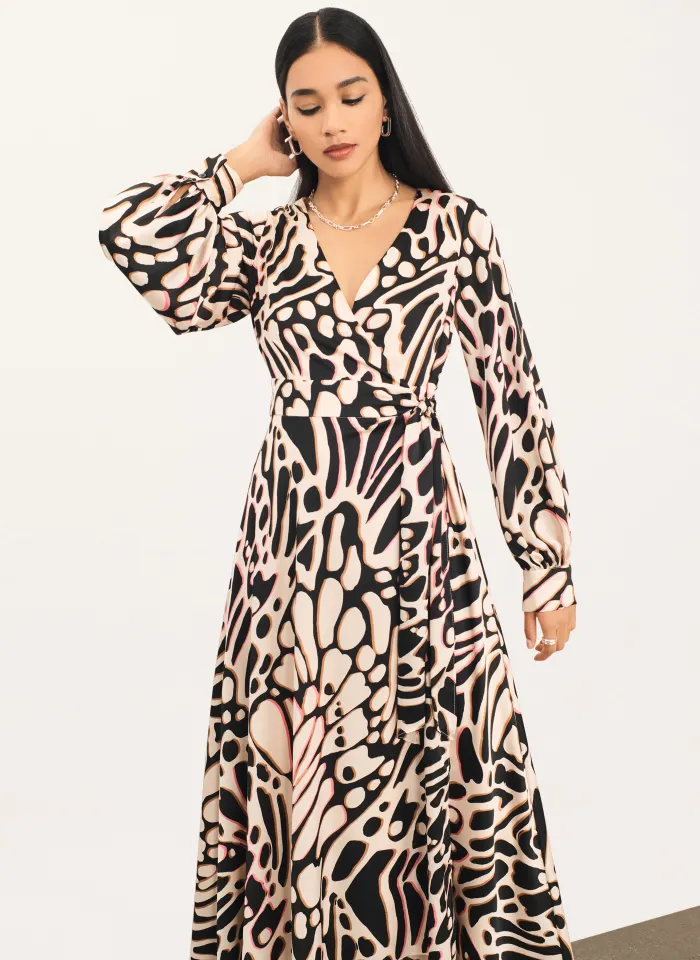
| Wrap dress | Versatile, flattering, easily dressed up or down, paying homage to the fluidity of sarongs. |
| Bodysuit | Sleek foundation piece, worn alone or layered, essentially inventing the modern concept of shapewear-as-outerwear. |
| Pantsuit | Tailored, comfortable, works across settings. Replaced the aggressive 1980s power suit with softer, sloping shoulders. |
| Cashmere sweater | An investment layering piece with a precise, body-conscious fit that feels like a second skin. |
| Cold-shoulder top/dress | A cutout silhouette widely credited to Karan that highlighted the one part of a woman’s body she believed never ages: the shoulders. |
Donna Karan Beauty and Fragrance: Beyond Cashmere Mist
Karan’s expansion into beauty and fragrance was as meticulously thought out as her apparel. The goal was always to appeal to the senses.

Donna Karan Cashmere Mist Eau de Parfum, launched as part of her 1992 fragrance line, was inspired by the feel of cashmere against the skin. It remains one of the best-selling fragrances in the United States.
Keynotes of Cashmere Mist
| Note | Character |
|---|---|
| Moroccan jasmine | Powerfully fragrant, intensely sweet floral |
| Lily of the valley | Clean, fresh green floral |
| Sandalwood | Sweet, woody base note |
The Global Phenomenon of DKNY Be Delicious
In 2004, the brand launched DKNY Be Delicious, a fragrance that quickly became a hallmark of the Y2K era. Created by master perfumer Maurice Roucel, the scent was designed to capture the vibrant, spontaneous energy of New York City. Packaged in an iconic, sculptural glass bottle shaped like a chrome-topped green apple, the fragrance celebrated “The Big Apple”. It features a bright, fruity-floral blend with top notes of green apple, cucumber, and grapefruit, grounded by magnolia, tuberose, and sandalwood. Be Delicious became a global blockbuster, spawning dozens of spin-offs and limited editions, and maintaining its status as a cult classic decades later.
Red Carpet Legacy and Celebrity Muses
Donna Karan’s designs have long been favored by celebrities who require clothing that commands attention without overpowering their individual personalities. Her ability to drape jersey and silk into Grecian, body-hugging silhouettes made her a staple at the Academy Awards and major galas. Muses like Barbra Streisand and Liza Minnelli were early champions of her work; in fact, Minnelli famously wore a Donna Karan “cold shoulder” dress to the Oscars in 1992.
However, the most historic moment for Karan’s “cold shoulder” design came in 1993, when then-First Lady Hillary Clinton wore a black, form-fitting Donna Karan gown to host her very first state dinner at the White House. The dress featured strategic cutouts that exposed Clinton’s shoulders while remaining otherwise modest. The look sparked a nationwide frenzy, with political pundits debating the meaning behind the revealing cutouts. Clinton later remarked that she simply “thought it would be fun,” quoting Karan’s famous design philosophy: “No matter your age, your size, your shoulders always look good”.
Sustainability and the Capsule Wardrobe Movement
Long before “capsule wardrobe” became a trending buzzword for eco-conscious influencers, Donna Karan invented the concept for the modern era. Her 1985 “Seven Easy Pieces” was fundamentally an exercise in sustainable consumerism—the idea that a woman only needs a handful of perfectly crafted, high-quality garments to look exceptional every single day.
By encouraging women to invest in durable fabrics and timeless silhouettes rather than chasing fast-fashion trends, Karan unknowingly became an early pioneer of the “buy less, choose well” philosophy. This ethos has fully transitioned into her current work at Urban Zen, which focuses strictly on a “buy now, wear now” model, completely removing her from the wasteful, frantic cycle of traditional seasonal fashion shows.
Urban Zen and Philanthropy: A Soulful Economy
In 2007, deeply affected by the loss of her husband Stephan Weiss to lung cancer, Karan founded the Urban Zen Foundation. Frustrated by her experiences in hospitals, she constantly asked, “Where is the care in healthcare?” The foundation is built upon three core pillars: preserving culture, advancing integrative healthcare, and empowering children through education.
The healthcare arm, the Urban Zen Integrative Therapy (UZIT) program, introduces holistic modalities—such as yoga, meditation, Reiki, and essential oil therapy—into traditional clinical settings for patients, their families, and medical staff.
Following the devastating 2010 earthquake in Haiti, Karan expanded the foundation’s cultural preservation efforts. She spent years on the ground, collaborating directly with local Haitian artisans to elevate their traditional crafts into luxury homewares and accessories. Her work helped establish a “soulful economy” by producing beautiful sculpted horn bowls, tobacco-leaf vases, and upcycled steel drum art, ensuring sustainable incomes for the makers while funneling proceeds back into the community.
Awards and Honors
Donna Karan’s monumental contributions to the American fashion industry have been recognized globally.
| Award | Awarding body |
|---|---|
| Coty American Fashion Critics’ Award (Multiple) | Coty Awards |
| Womenswear Designer of the Year (1990, 1996) | Council of Fashion Designers of America (CFDA) |
| Menswear Designer of the Year (1992) | Council of Fashion Designers of America (CFDA) |
| Lifetime Achievement Award (2004) | Council of Fashion Designers of America (CFDA) |
| Geoffrey Beene Lifetime Achievement Award | YMA Fashion Scholarship Fund |
| Founder’s Award in Honor of Eleanor Lambert (2016) | Council of Fashion Designers of America (CFDA) |
| Women’s Leadership Award | Savannah College of Art and Design |
Note: In 2016, Karan’s close friend and fellow legendary designer Calvin Klein proudly presented her with the CFDA Founder’s Award.
Where the Brands Stand Today
Donna Karan’s relationship with the fashion house that bears her name has changed significantly since she stepped back in 2015. Here’s how things stand as of 2026:
- Ownership: LVMH sold Donna Karan International, including the Donna Karan and DKNY brands, to G-III Apparel Group in 2016 for $650 million. G-III, a NASDAQ-listed manufacturer based in New York, also owns or licenses brands including Karl Lagerfeld, Calvin Klein, Tommy Hilfiger, and Levi’s.
- DKNY today: Recent DKNY campaigns have featured Emily Ratajkowski, Kaia Gerber, and Hailey Bieber, with Bieber named the brand’s global ambassador in 2025. The brand currently operates roughly seventy Donna Karan Collection and DKNY stores worldwide, including locations in China, Canada, and the Middle East.
- Karan’s own venture: Since leaving day-to-day design, Karan has focused on Urban Zen, a lifestyle brand and foundation she owns independently, built around artisan-made apparel, jewelry, and home goods, with retail locations in Manhattan’s West Village, Sag Harbor, and West Hollywood. Urban Zen continues to run its annual Holiday Marketplace and “Soulful Economy” pop-up events at the Stephan Weiss Studio in New York.
- Philanthropy: The Urban Zen Foundation continues its long-running work in Haiti, including artisan vocational training, alongside integrative health initiatives at the Urban Zen Center in Manhattan.

Pashalis Laoutaris
I am a professional writer, fashion blogger, and the owner of https://laoutaris.com. I have over 20 years of experience as a salesperson and 10 years of experience as a fashionista. I write daily blog articles about fashion, tools, converters, and everything you need to know about current trends.Laoutaris Recommends





quo et ducimus at quam itaque rerum et vero velit sint consequatur fugit earum sapiente ad impedit voluptatem. voluptas at porro pariatur maxime harum nemo non.
Translated from latin:
by which we lead, but the consequences of things, and the truth of the will, the wise man flees from them to hinder pleasure. but most of these none of them can bear the pleasure of going on.