Discover the top engagement ring settings with pros, cons, and expert tips. Find the perfect ring design to match your style, budget, and diamond shape.
Table of Contents
Beyond the Solitaire: A Complete Guide to Diamond Engagement Ring Settings (2025 Edition)
Choosing an engagement ring is one of life’s most meaningful milestones. And while the center diamond often gets the spotlight, the setting—the structural design that holds the stone—is what truly defines the ring’s beauty, durability, and personality.
This comprehensive guide covers the eight most popular engagement ring settings, along with expert tips for choosing the perfect style for your lifestyle and preferences.
Why the Setting Matters More Than You Think
The setting you choose influences far more than just aesthetics. Here’s what your setting affects:
- Sparkle and brilliance – How light interacts with your diamond
- Stone security – How safely your diamond is held in place
- Comfort on the finger – How the ring feels during daily wear
- Durability for everyday wear – How well it withstands your lifestyle
- Overall design and style – The visual impact and personality of your ring
- Perceived diamond size – How large the diamond appears to the eye
Here’s the truth: A 1-carat diamond can look dramatically different depending on whether it’s in a halo, solitaire, bezel, or pavé setting. Your choice matters—a lot.
The 8 Most Popular Engagement Ring Settings
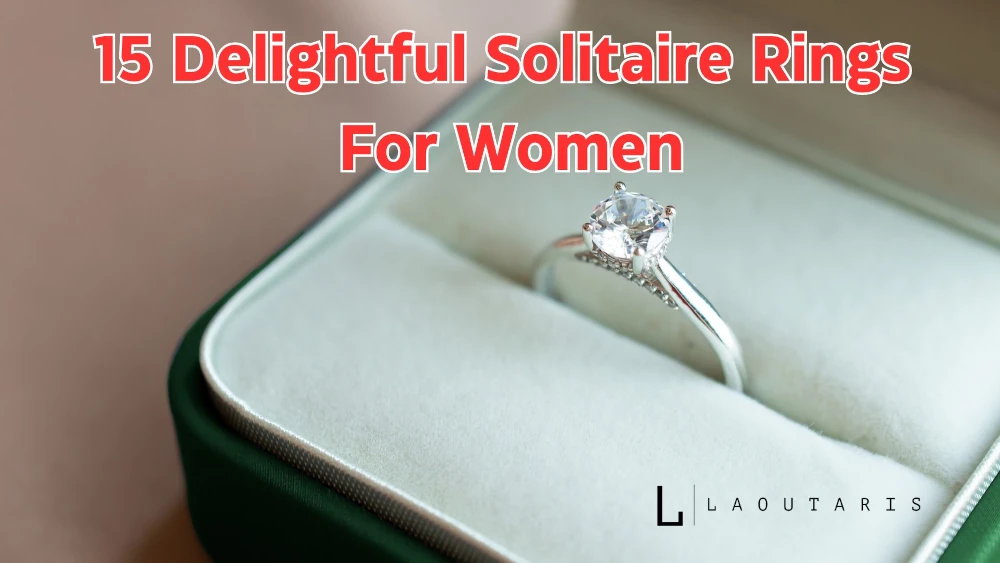
1. Solitaire Setting: Simple, Elegant, and Timeless
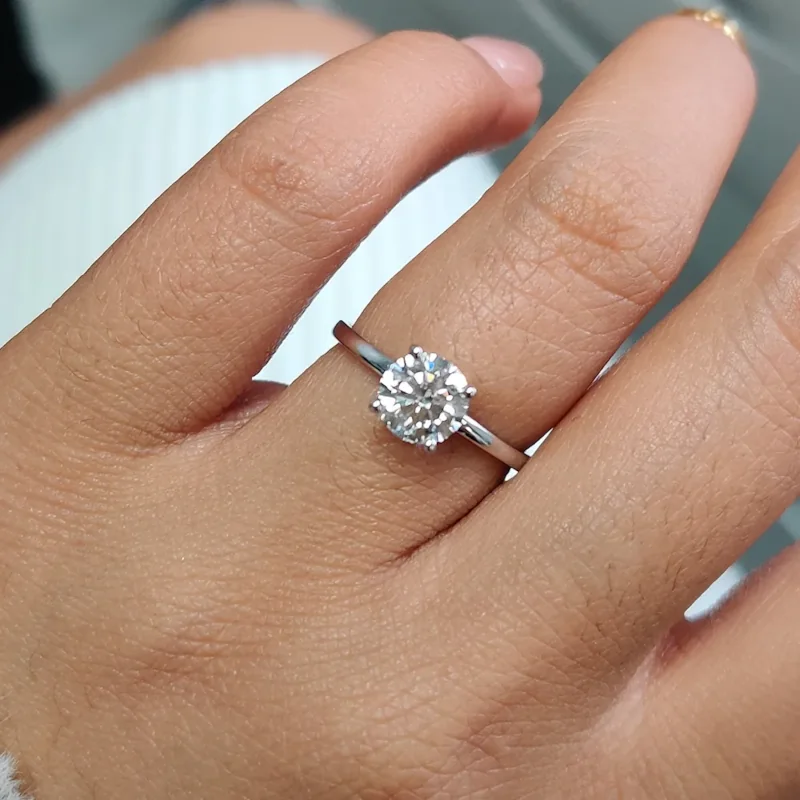
A solitaire setting features a single diamond mounted on a band with four or six prongs. Known for its minimalist beauty, it’s the most iconic engagement ring style.
Why It’s Loved:
- Classic appeal that never goes out of style
- Focuses attention entirely on the diamond
- Easy to match with wedding bands
Pros:
- Maximum sparkle – nothing blocks light from entering the diamond
- Easy maintenance – simple design means fewer places for dirt to accumulate
- Timeless style – will look beautiful for generations
Cons:
- Prongs may snag on clothing or hair
- Less protective than bezel or channel settings
- The diamond sits higher, making it more vulnerable to bumps
2. Bezel Setting: Modern and Ultra-Secure
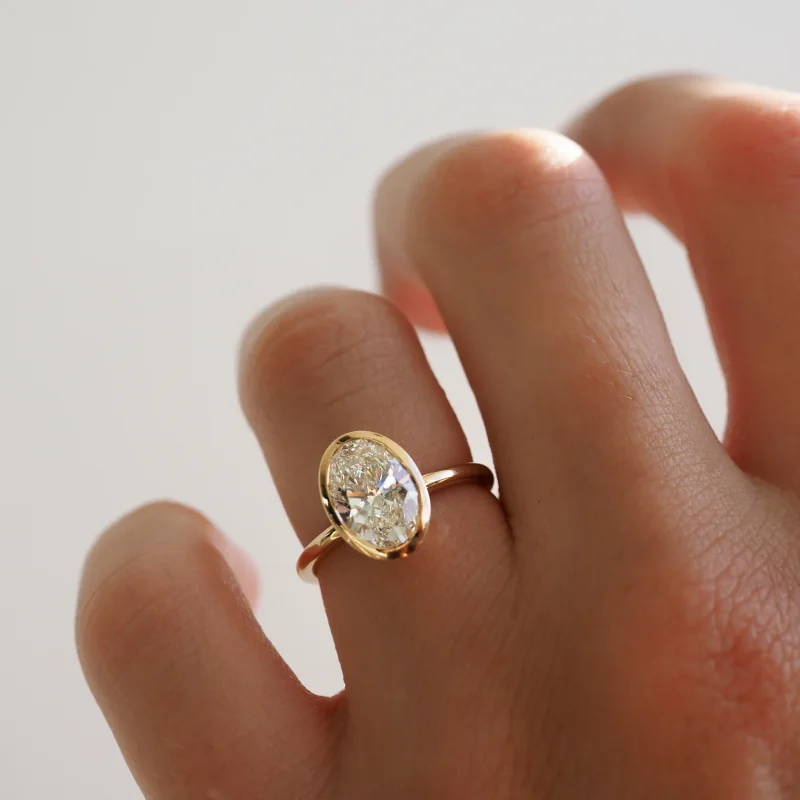
The bezel setting encircles the diamond in a polished metal rim. This creates a modern aesthetic and offers excellent protection for your stone.
Why It’s Great:
- Smooth edges that won’t catch on anything
- Does not snag on clothing or fabrics
- Ideal for active lifestyles and hands-on work
Pros:
- Extremely secure – the metal rim protects the diamond’s edges
- Sleek, contemporary profile
- Makes diamonds look slightly larger due to the metal border
- Low maintenance and durable
Cons:
- Somewhat less light enters the stone (though high-quality cuts still sparkle beautifully)
- Harder to resize due to the metal encircling the stone
- A more modern look may not appeal to traditionalists
3. Pavé Setting: Sparkle from Every Angle
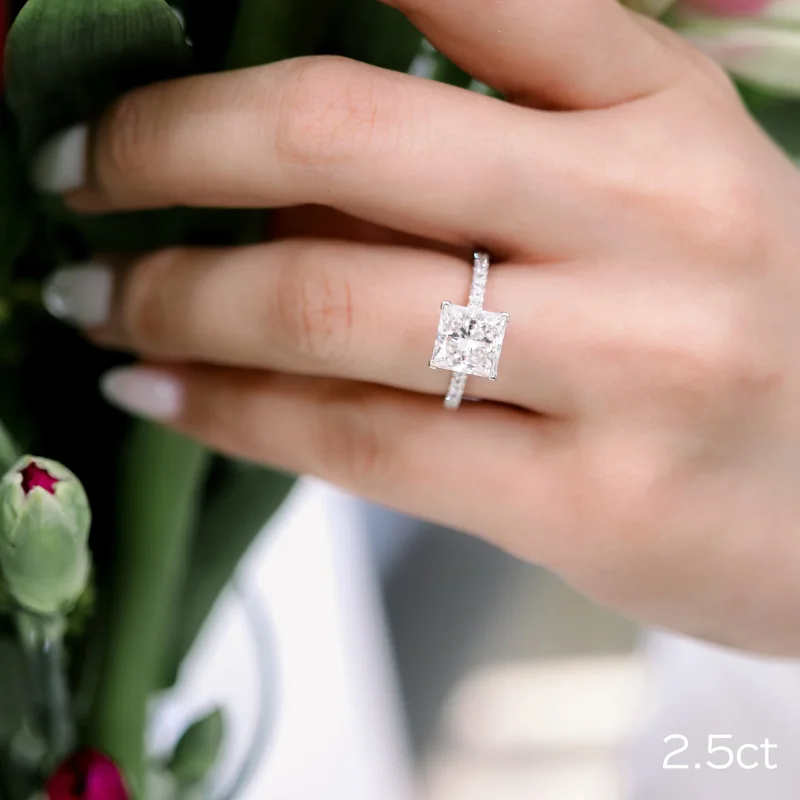
Pavé settings use small diamonds set closely together along the band, creating a continuous, elegant sparkle. The name comes from the French word for “paved.”
Why It’s Popular:
- Dazzling brilliance from every angle
- Luxurious, high-end appearance
- Works beautifully with solitaires and halos
Pros:
- High sparkle factor – maximizes brilliance
- Glamorous detail that catches the light
- Enhances the center stone’s appearance
- Adds significant visual impact without a huge price increase
Cons:
- Tiny stones may loosen over time with wear
- Requires periodic maintenance and professional inspection
- Small diamonds can trap dirt and require regular cleaning
4. Channel Setting: Clean, Structured, and Secure
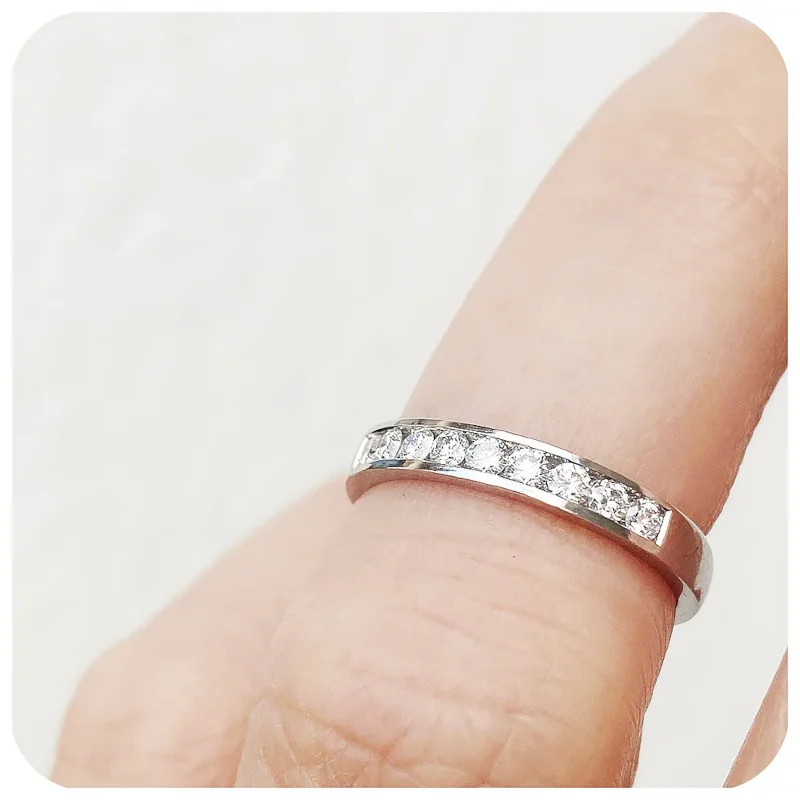
In a channel setting, diamonds are set between two metal walls, creating a smooth, continuous line of sparkle without any prongs.
Benefits:
- Very secure – diamonds are protected by metal on both sides
- Prong-less design won’t snag on anything
- Great for active lifestyles
- Clean, modern lines
- Comfortable for everyday wear
Downsides:
- Harder to resize due to the diamonds set into the band
- Dirt may accumulate in the channels over time
- Less sparkle than pavé (fewer facets exposed to light)
5. Three-Stone Setting: Symbolic and Romantic
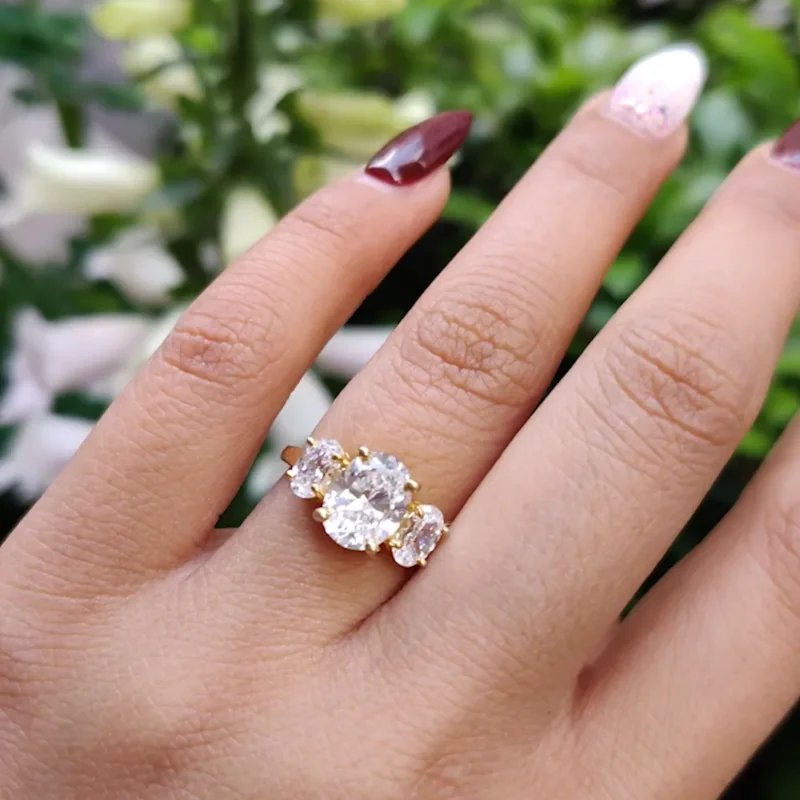
Three stones represent the past, present, and future of your relationship, creating a significant design. The center stone is typically larger, flanked by two smaller stones.
Pros:
- Symbolic and sentimental meaning
- Bold, balanced look with significant presence
- Easily customizable – choose different stone shapes or colors
- Makes the center diamond appear larger
- Offers design flexibility
Cons:
- More expensive due to additional stones
- May require a curved or custom wedding band to fit flush
- A higher profile means more vulnerability to damage
6. Tension Setting: Futuristic and Striking
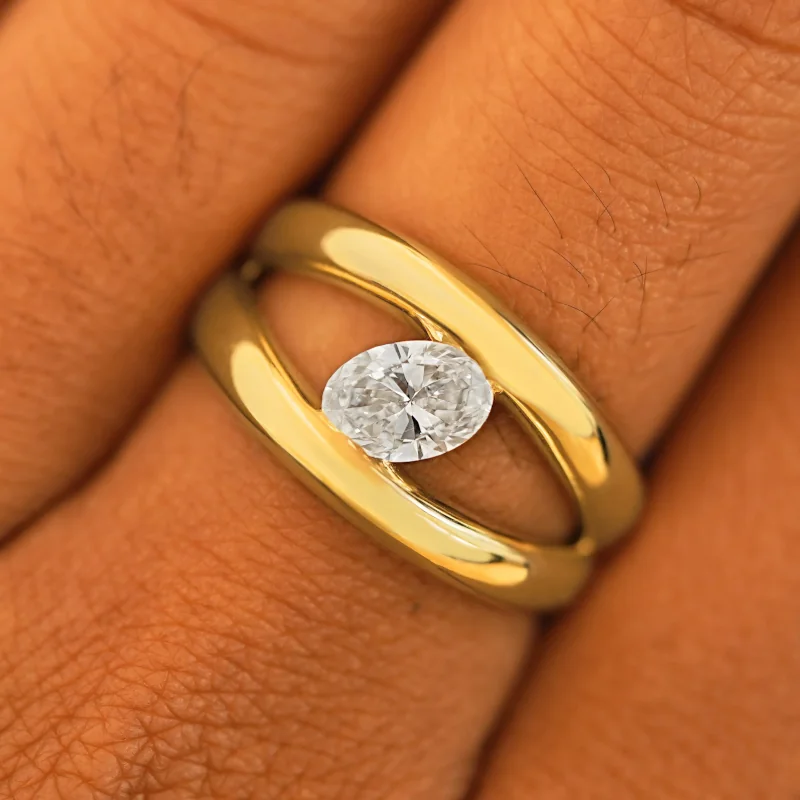
Tension settings use pressure from the metal band to hold the diamond in place, giving it a dramatic floating effect. This contemporary design showcases the diamond from all angles.
Benefits:
- Unobstructed light entry – maximum sparkle
- Bold and modern aesthetic
- Minimalist appeal with maximum impact
- Unique and conversation-starting
Drawbacks:
- Requires expert craftsmanship – not all jewelers can create these properly
- Difficult to resize
- Not ideal for softer gemstones (works best with diamonds)
- May not be suitable for very active lifestyles
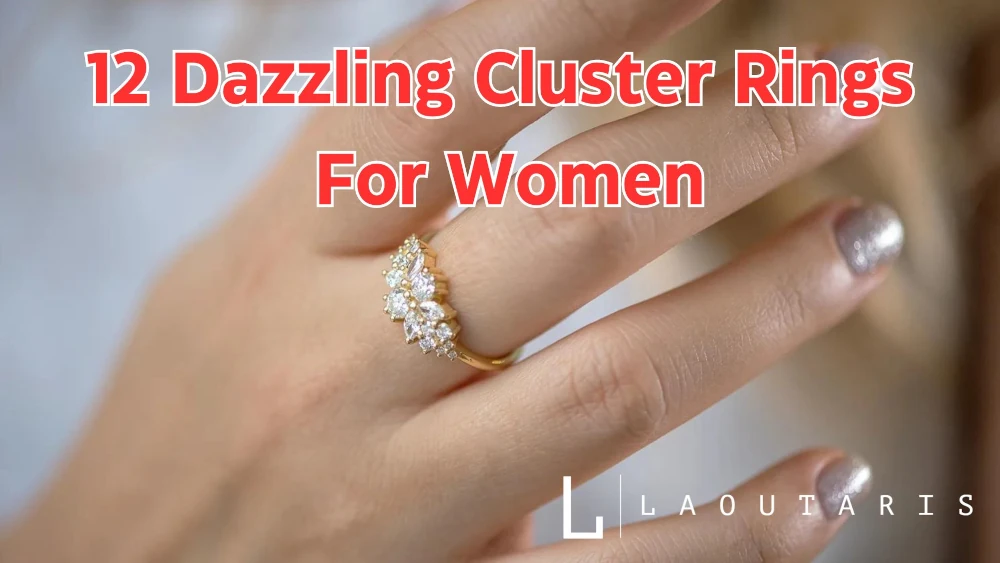
7. Cluster Setting: Big Look, Budget-Friendly
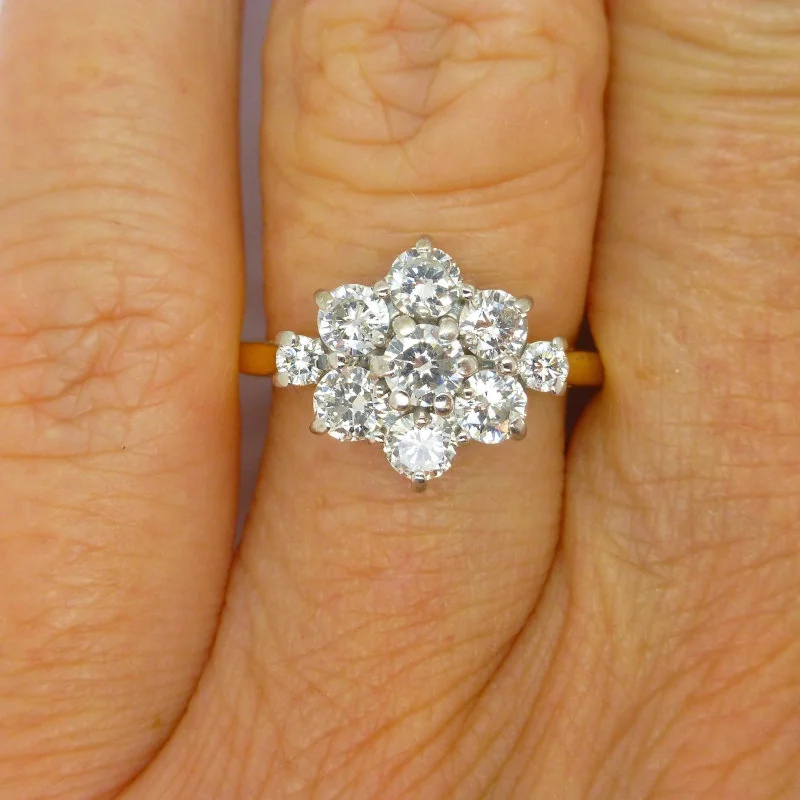
Multiple smaller diamonds are arranged to create the appearance of a larger stone. This vintage-inspired style offers significant sparkle and visual impact.
Advantages:
- High sparkle for less money
- Unique, artistic designs
- Vintage-inspired aesthetic options
- Great way to maximize brilliance on a budget
- Creates a larger look without a single large diamond
Considerations:
- Harder to clean due to multiple small stones and settings
- More ornate look that may not appeal to minimalists
- More maintenance required
- Individual small diamonds may loosen over time
8. Halo Setting: Stunning Size Enhancement
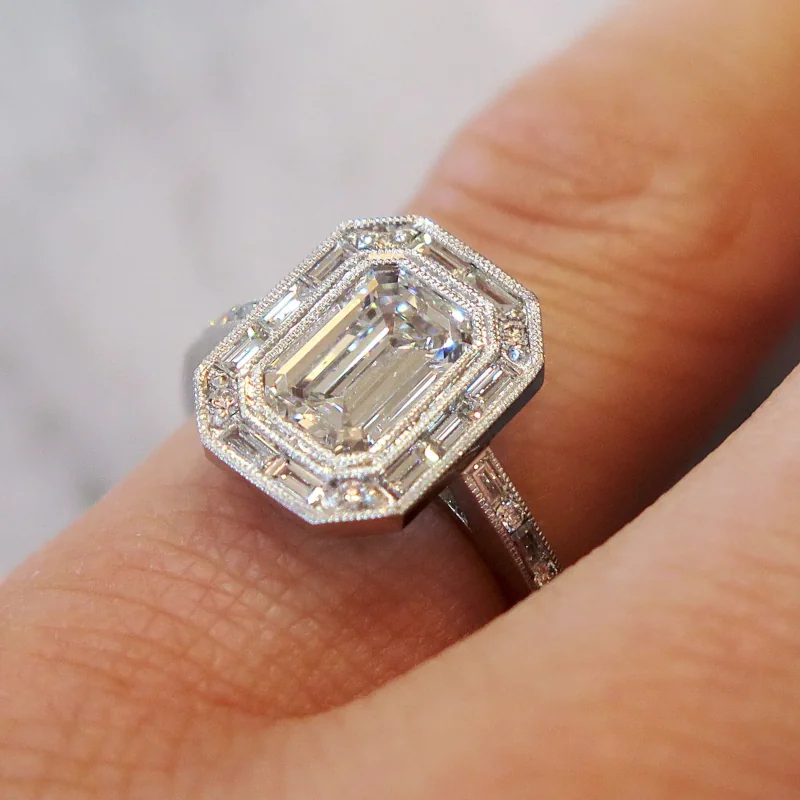
A halo setting surrounds a center stone with a ring (or multiple rings) of smaller diamonds, amplifying both sparkle and the perceived size of the center stone.
Highlights:
- Makes your diamond look significantly bigger
- Adds tremendous brilliance and fire
- Offers symmetry and elegant design
- Available in single or double halo options
- Works with virtually any diamond shape
Limitations:
- Requires regular cleaning – small diamonds trap dirt easily
- Very popular, which means less uniqueness
- It can be more expensive due to additional diamonds
- May not pair well with all wedding band styles
Quick Comparison: At-a-Glance Setting Features
| Setting | Security | Sparkle Level | Maintenance | Best For | Price Range |
|---|---|---|---|---|---|
| Solitaire | Medium | High | Low | Classic lovers, minimalists | $$ |
| Bezel | Very High | Medium-High | Low | Active lifestyles | $$ |
| Pavé | Medium | Very High | High | Glamour seekers | $$$ |
| Channel | High | Medium | Medium | Modern, active wearers | $$ |
| Three-Stone | Medium | High | Medium | Sentimental, bold styles | $$$-$$$$ |
| Tension | High* | Very High | Low | Modern minimalists | $$$ |
| Cluster | Medium | Very High | High | Vintage lovers, budget-conscious | $-$$ |
| Halo | Medium | Very High | High | Maximum impact seekers | $$$-$$$$ |
*When crafted adequately by expert jewelers
How to Choose the Best Setting for You
Consider Your Lifestyle
If you’re hands-on or active, choose:
- Bezel – maximum protection
- Channel – smooth design
- Low-profile solitaire – less likely to catch
- Flush mount – sits close to the finger
If you want high sparkle above all else:
- Pavé – continuous brilliance
- Halo – maximum visual impact
- Cluster – abundant sparkle
If you prefer low maintenance:
- Solitaire – simple and easy to clean
- Bezel – no prongs to check
- Channel – protected stones
Match Your Personal Style
| Your Style | Best Settings |
|---|---|
| Classic & Traditional | Solitaire, Three-Stone |
| Modern & Contemporary | Bezel, Tension, Channel |
| Glamorous & Bold | Halo, Pavé, Cluster |
| Vintage & Romantic | Cluster, Halo (with milgrain details) |
| Sentimental & Meaningful | Three-Stone, Custom designs |
| Minimalist & Clean | Solitaire, Bezel, Tension |
Think About Diamond Shape Compatibility
Different diamond shapes work better with specific settings:
Round Brilliant:
- Works beautifully with every setting type
- Most versatile diamond shape
Oval:
- Stunning with halos (elongates the finger)
- Great with pavé bands
- Consider a hidden halo for extra sparkle
Cushion:
- Looks beautiful in halos
- Vintage-inspired settings complement its soft edges
- Pavé bands enhance their romantic appeal
Princess:
- Benefits of V-prongs for corner protection
- Modern bezels work well
- Channel settings complement its geometric shape
Pear:
- Halo enhances symmetry and protects the point
- Three-stone with round or pear side stones
- The bezel provides excellent protection for the delicate tip
Emerald:
- Clean solitaires highlight their step-cut facets
- Three-stone settings emphasize their elegance
- Avoid overly ornate settings that compete with its geometry
Combine Beauty and Practicality
Ask yourself these critical questions:
- Do I want high sparkle or simplicity?
- High sparkle → Halo, Pavé, Cluster
- Simplicity → Solitaire, Bezel
- How often will I wear the ring?
- Daily wear → Choose durable, low-profile options
- Special occasions → More elaborate designs work well
- Do I prefer low-maintenance or high-glam?
- Low-maintenance → Solitaire, Bezel
- High-glam → Pavé, Halo
- Will this setting pair well with my desired wedding band?
- Straight bands → Most solitaires, bezels
- Curved bands → May be needed for halos, three-stones
- What’s my budget?
- More affordable → Cluster, simple solitaire
- Investment piece → Three-stone, elHaloatHalolo
Frequently Asked Questions
What is the most secure setting?
A full bezel offers the highest level of security, as the diamond is surrounded by metal. Channel settings are also very secure, with stones protected between metal walls.
Which setting makes diamonds look bigger?
Halo settings create the most significant visual impact, often making a diamond appear half a carat to a full carat larger. Bezel settings can also make diamonds look slightly bigger due to the metal border.
Which settings are the lowest maintenance?
Solitaire and bezel settings are easiest to care for. Their simple designs have fewer places for dirt to accumulate and fewer small stones that could loosen.
Are tension settings safe?
Yes, when crafted by a reputable jeweler using durable metals like platinum or high-quality gold. However, they require expert craftsmanship and aren’t suitable for all gemstones.
Can I upgrade my settings later?
Absolutely! Many couples update their settings for anniversaries or when their lifestyle changes. Most diamonds can be remounted into new settings.
Which settings need the most maintenance?
Pavé and prong-heavy designs require routine inspection (at least annually) to ensure small stones haven’t loosened and prongs remain secure.
What metal works best with my setting?
- Platinum: Most durable, hypoallergenic, works with all settings
- White Gold: Popular, affordable, requires occasional replating
- Yellow Gold: Classic, warm tone, great for vintage styles
- Rose Gold: Romantic, modern, trending option
How do I know if a setting is well-made?
Look for:
- Even symmetrical prongs
- Smooth finish with no rough edges
- Secure stone placement (shouldn’t wiggle)
- Quality hallmarks indicating metal purity
- Reputable jeweler with good reviews
Extra Buying Tips
1. Prioritize Diamond Cut Quality
Cut quality affects brilliance more than anything else. A well-cut diamond in a simple setting will outshine a poorly cut diamond in an elaborate setting. Always invest in the best cut grade you can afford.
2. Explore Lab-Grown Diamonds
Lab-grown diamonds are:
- Eco-friendly and ethically sourced
- 30-40% less expensive than mined diamonds
- Identical in every way (chemically, physically, optically)
- A smart way to get a larger or higher-quality stone within your budget
3. Consider Wedding Band Compatibility
Some settings don’t fit flush against straight wedding bands:
- Halos often require curved or contoured bands
- High-set solitaires may need specialty bands
- Three-stone rings might need custom-fit bands
Ask to see how your engagement ring looks with potential wedding bands before making a final decision.
4. Try On Multiple Styles
Photos can be deceiving. Different settings can dramatically change how a diamond looks on your hand:
- Small hands may be overwhelmed by large halos
- Long fingers can handle bold, statement designs
- Your personal style should feel authentic
Visit jewelers and try on various settings to see what genuinely feels like “you.”
5. Think Long-Term
Consider how the ring will age:
- Will you still love this style in 10, 20, 30 years?
- Does it suit your evolving lifestyle?
- Is it durable enough for decades of wear?
Classic designs tend to have lasting appeal, but if you love trendy styles, that’s valid too—go in with awareness.
Maintenance Tips for Long-Lasting Beauty
Keep your engagement rings sparkling for a lifetime:
Regular Cleaning:
- Clean weekly with mild soap and a soft brush
- Soak for 20-30 minutes, then gently scrub
- Rinse thoroughly and pat dry with a lint-free cloth
Protect Your Ring:
- Remove when exercising, gardening, or doing manual work
- Take off before applying lotions, creams, or cosmetics
- Avoid exposure to harsh chemicals, chlorine, or bleach
- Store separately to prevent scratching
Professional Maintenance:
- Have prongs and pavé checked annually by a jeweler
- Get professional cleanings 2-3 times per year
- Have your ring inspected after any significant impact
- Consider insurance for valuable rings
Daily Habits:
- Put your ring on last (after makeup, lotion, perfume)
- Take it off first when you get home
- Store in a fabric-lined jewelry box
- Check periodically that stones are secure (gently tap—nothing should rattle)
Conclusion: Choose the Setting That Speaks to You
Your engagement ring setting should reflect:
- Your personal style – What makes you feel beautiful?
- Your unique personality – Bold or subtle? Classic or modern?
- Your daily lifestyle – Active or desk-bound? Hands-on or office work?
- Your love story – What symbolism resonates with you?
The right engagement ring doesn’t just sparkle—it resonates with meaning and feels authentically you. Whether you’re drawn to the timeless simplicity of a solitaire, the modern edge of a bezel, the romantic symbolism of a three-stone, or the show-stopping glamour of a halo, there’s no wrong choice.
The perfect setting is the one that makes your heart skip a beat every time you look at your hand.
Take your time, do your research, try on multiple styles, and trust your instincts. This ring will be on your finger for a lifetime—make sure it tells your unique story.
Recommended Resources
For more information on diamond education and engagement rings:
- Gemological Institute of America (GIA) – Diamond grading authority and education
www.gia.edu - American Gem Society (AGS) – Engagement ring settings guide
www.americangemsociety.org - Blue Nile – Comprehensive ring and diamond education
www.bluenile.com/education - James Allen – Detailed engagement ring settings guide
www.jamesallen.com/education - Brilliant Earth – Ethical jewelry and education resources
www.brilliantearth.com - International Gem Society – Ring setting types and gemstone information
www.gemsociety.org - Brides Magazine – Comprehensive engagement ring buying guide
www.brides.com - The Knot – Engagement ring styles and wedding planning
www.theknot.com
Ready to find your perfect engagement ring? Start by identifying your lifestyle needs and personal style preferences, then visit reputable jewelers to try on different settings. Your dream ring is out there—happy shopping!

Pashalis Laoutaris
I am a professional writer, fashion blogger, and the owner of https://laoutaris.com. I have over 20 years of experience as a salesperson and 10 years of experience as a fashionista. I write daily blog articles about fashion, tools, converters, and everything you need to know about current trends.Laoutaris Recommends