
Use our free bracelet size calculator to find the right size and never guess the correct length again.
Table of Contents
This tool was last updated on 09/07/2026.
Are you tired of buying bracelets online only to find out they don’t fit your wrist? Or maybe you’re buying one as a gift and have no idea what size to choose. You’re not alone — bracelet returns are one of the most common issues in online jewelry shopping, and most of it comes down to one thing: nobody measured their wrist first.
That’s where this calculator comes in. Enter your wrist measurement in inches or centimeters, and it will instantly tell you which size category — X-Small through XXX-Large — fits you best. Below the calculator, you’ll also find a full sizing chart, step-by-step measuring instructions, a breakdown of how bracelet style changes the fit, and answers to the most common sizing questions.
How to measure your wrist
You only need two things: a flexible tape measure (or a strip of paper/ribbon and a ruler) and about 30 seconds.
- Wrap the tape around your wrist, just below the wrist bone (the bony bump on the pinky side of your wrist, known as the ulna head) — the same spot where a bracelet naturally sits.
- Keep it snug but comfortable. You should be able to fit one fingertip under it with little resistance.
- Note the measurement in inches or centimeters, wherever the tape overlaps.
- No tape measure? A strip of paper or a piece of string works just as well — mark the point of overlap with a pen, then lay it flat and measure it with a ruler. This is the same method recommended by jewelry insurers and retailers alike, since a soft ribbon-style tape gives the most accurate wrist circumference.
- Add for fit. Most jewelers suggest adding roughly ¼ inch for a snug fit, ½ inch for a classic comfort fit, and ¾ inch to 1 inch if you like your bracelet to drape loosely.
If you’re measuring a bangle instead of a clasp bracelet, the process is different — bangles are sized to your hand, not your wrist, since they need to slide over your knuckles. Fold your thumb into your palm, wrap the tape around the widest part of your hand, and use that measurement instead.
Bracelet size calculator
Select your unit, enter your wrist measurement, choose your preferred fit, and click Calculate. If you’re sizing a bangle rather than a clasp bracelet, check the bangle box first — bangles are sized to your hand, not your wrist (see the style guide below for why).
Bracelet Size Calculator
Bracelet size chart (inches & centimeters)
Use this chart to match your wrist measurement to a standard size category, or to double-check what the calculator gave you.
| Size | Wrist (inches) | Wrist (centimeters) |
|---|---|---|
| X-Small | 4.70″ – 5.25″ | 12.0 – 13.3 cm |
| Small | 5.26″ – 5.75″ | 13.4 – 14.6 cm |
| Medium | 5.76″ – 6.25″ | 14.7 – 15.9 cm |
| Large | 6.26″ – 6.75″ | 16.0 – 17.1 cm |
| X-Large | 6.76″ – 7.25″ | 17.2 – 18.3 cm |
| XX-Large | 7.26″ – 7.75″ | 18.4 – 19.6 cm |
| XXX-Large | 7.76″ – 8.25″ | 19.7 – 21.0 cm |
This chart is based on common industry sizing standards, including Tiffany & Co.’s official bracelet size guide — you may see centimeter ranges rounded slightly differently from one retailer to the next (for example, some list Medium as starting at 14.6 cm instead of 14.7 cm), but the difference is negligible in practice.
This chart is calibrated to typical women’s wrist sizes. If you’re sizing a bracelet for a man, wrists generally run larger — see the average size table below, or expect to add roughly ¾” to 1″ to the ranges above.
Average bracelet size by gender
If you don’t have a tape measure handy, these industry averages are a reasonable starting point — though nothing beats measuring your own wrist.
| Group | Average wrist/bracelet size | Source |
|---|---|---|
| Women (general average) | 6.5″ – 7″ | Greenwich St. Jewelers |
| Women (most common size) | 7 inches | Jewelers Mutual Group |
| Women’s charm/multi-link bracelets | 6½” – 7½” | James Avery |
| Men (general average) | 7.5″ – 8.5″ | Greenwich St. Jewelers |
| Men (most popular size) | 8 inches | Tresor Jewelry’s sizing guide |
Note that these numbers vary slightly by retailer, since professional jewelers factor in bracelet length, clasp type, and material stiffness in addition to the raw wrist measurement. Treat any “average size” as a starting point, not a substitute for measuring.
A note on terminology: the figures above describe finished bracelet length, not your raw wrist circumference. A finished bracelet is typically your wrist measurement plus your preferred fit allowance (see the fit table below) — so a 7-inch bracelet doesn’t necessarily mean a 7-inch wrist.
International sizing: most U.S. and European retailers size bracelets in inches or centimeters using the wrist-circumference method described here, but some European and Asian brands use their own proprietary numbered sizing systems (similar to ring sizes). If you’re buying from a brand with its own size numbers, convert your wrist measurement to inches or centimeters first, then check that specific brand’s chart rather than relying solely on the table above.
How bracelet style changes your size
Not every bracelet fits the same way at the same wrist measurement. The clasp, structure, and how the piece is worn all matter:
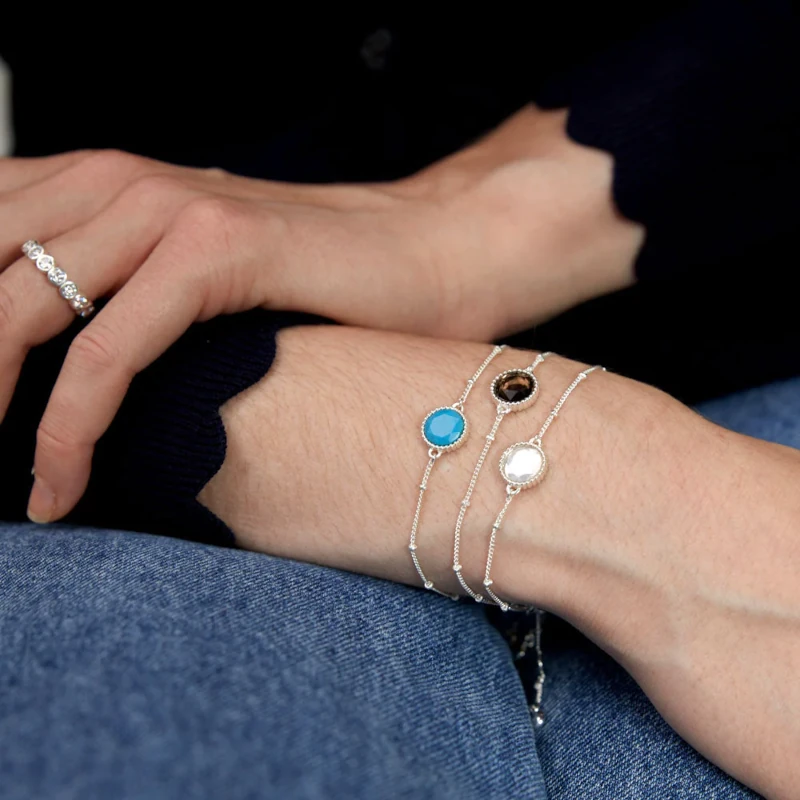
- Chain and multi-link bracelets — these are the most forgiving, since most are adjustable. A good fit lets you slide one or two fingers between the chain and your wrist.
- Bangles — solid and hinged bangles don’t have a clasp, so they’re sized to your knuckles, not your wrist. A bangle should fit closely or loosely, but shouldn’t slide easily over the heel of your hand.
- Cuffs — open-backed and designed to sit snugly. Cuffs tend to fit the wrist more closely than other styles, so if you like extra room, size up.
- Hook-on bracelets — similar to cuffs in that they tend to run snug, so go up a size for a looser fit.
- Tennis bracelets — typically worn snug against the wrist for security, since they’re often set with stones and worn daily.
- Ankle bracelets — a different category entirely; the standard length for a women’s ankle bracelet is about 10 inches, measured just below the ankle bone rather than the wrist.
- Charm bracelets (Pandora-style) — these sit at the flexible end of the spectrum, similar to chain bracelets, but the added weight and bulk of charms can make a bracelet sit slightly tighter than an unadorned chain of the same length. If you plan to add charms over time, consider sizing up slightly or choosing a style with a few extra links.
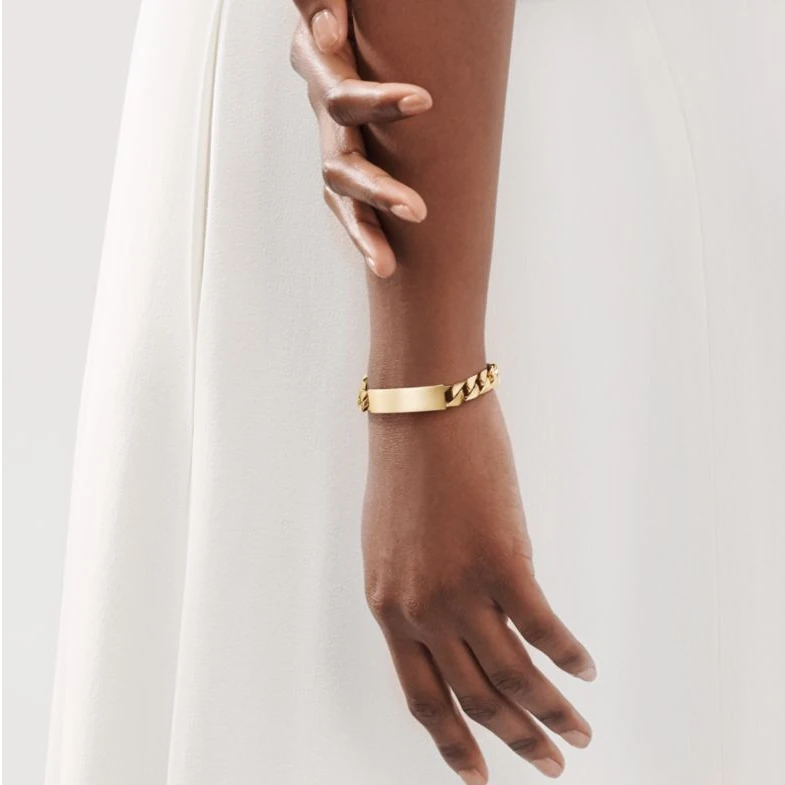
Your body type and the bracelet’s design also play a role. Petite wrists often suit a smaller size best, while a larger wrist may feel more comfortable in a bigger size, and chunkier link patterns or wide cuffs generally need a little extra room compared to delicate chains.
Choosing a fit: snug, classic, or drape
Once you know your wrist circumference, decide how loose you want the bracelet to sit. A snug fit, classic fit, and drape fit each call for a different amount added to your base wrist measurement.
| Fit style | What to add to your wrist measurement | Best for |
|---|---|---|
| Snug | + ¼ inch | Delicate chains, tennis bracelets, stacking pieces |
| Classic/Comfort | + ½ inch | Everyday wear, most chain and link bracelets |
| Drape | + ¾ inch to 1 inch | Bangles worn loosely, statement pieces, layered looks |

Keep in mind that a bracelet’s clasp or extender can add up to an extra ½ inch to the total length, so if a piece feels slightly bigger than expected once it arrives, that’s often why.
Buying a bracelet as a gift
Sizing a bracelet for someone else is trickier, since you can’t measure their wrist without giving away the surprise. A few practical workarounds:
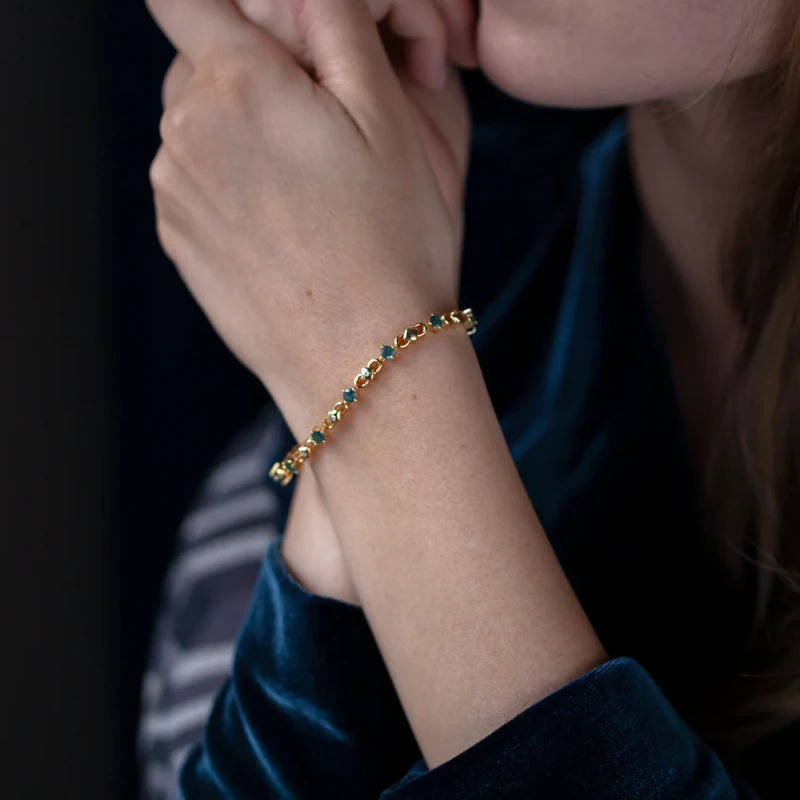
- Borrow an existing bracelet they already wear and measure its length flat against a ruler.
- Go with a medium or adjustable size. If you don’t have exact measurements, a medium size is a safe choice since it comfortably fits most people, and adjustable clasps or extenders add a safety margin.
- Ask a mutual friend or family member to casually check the size of a bracelet they already own.
- Choose adjustable or extendable styles — chain bracelets and tennis bracelets with extender links are far more forgiving gifts than a fixed-size bangle or cuff.
- Consider open cuffs or sliders. Open-backed cuffs and slider-clasp bracelets flex to fit a range of wrist sizes, which takes the guesswork out of gifting almost entirely.
Check out this guide and chart from Tiffany.
Frequently Asked Questions
How accurate is the bracelet size calculator?
The accuracy depends on how carefully you measured your wrist and how closely the predefined size ranges match the retailer you’re buying from. It’s a reliable starting point for most people, but remember that bracelets in different styles and materials — a stiff cuff versus a fluid chain, for example — can fit differently even at the same labeled size.
Can I use the calculator for all types of bracelets?
It works well for chain, cuff, and bangle-style bracelets in general, but styles like adjustable cord bracelets, tennis bracelets, or designer pieces sometimes use their own proprietary sizing systems. It’s always worth checking the specific retailer’s size chart before buying a higher-cost piece.
How do I measure my wrist accurately?
To measure your wrist accurately, use a flexible measuring tape, a piece of string, and a ruler. Wrap the measuring tape or string around the widest part of your wrist, just below the hand bone. Ensure the tape or string is snug but not tight, and note the measurement in inches or millimeters.
What if my wrist measurement falls between two size categories?
Most jewelers recommend sizing up rather than down. If you like a tighter fit, choose a size at the lower end of your measurement range; if you prefer some room, opt for a size at the higher end. Many bracelets also come with adjustable clasps or can be custom-sized for a small fee.
What is the standard bracelet size?
For women’s charm and multi-link bracelets, the standard length is 6½ to 7½ inches, with 7 inches being the most common size. Bangle and cuff bracelets for women typically measure around 7 inches in circumference.
How will I know my bracelet fits well?
For a multi-link bracelet, you should be able to fit one or two fingers between the chain and your wrist. Bangles can sit snugly or loosely, but shouldn’t slide off too easily over the heel of your hand. Cuffs and hook-on styles typically run snugger — size up if you prefer a looser feel.
Your body type matters too: petite wrists often suit smaller sizes, while larger wrists may feel better in a bigger size. And if the bracelet has a bold, chunky design, sizing up usually keeps it comfortable.Does bracelet material affect sizing?
Yes. Stiffer materials like solid metal bangles and cuffs need more precise sizing since they don’t flex, while beaded, cord, or chain bracelets have more natural give and are more forgiving of a slightly off measurement.

Pashalis Laoutaris
I am a professional writer, fashion blogger, and owner of the site https://laoutaris.com. As a salesperson for more than 20 years, I have experience of 10 years in the fashion industry. I consider myself a true fashionista. I am writing daily blog articles about fashion, tools and converters, and everything you need to know about the current fashion trends.
Laoutaris Recommends



I ddo not evrn know howw I endrd upp here, butt I thought this post wass great.
I don’t know whho you arre buut certainly you arre
going to a famous bloggerr if yoou aren’t alreacy 😉 Cheers!