
There’s something deeply satisfying about walking into a Boutique Closet Design and knowing exactly where everything is. No digging through cramped hangers, no untangling jewelry at 7 am, no forgetting you own something beautiful because it’s buried at the back of a drawer. For fashion enthusiasts, a thoughtfully designed wardrobe space isn’t a luxury; it’s the difference between a chaotic morning and one that actually feels good.
The goal is a space that works like a boutique: every piece visible, every accessory protected, and the whole thing arranged so that putting together an outfit feels creative rather than stressful.
Table of Contents
Quick Takeaways
A well-designed closet does more than store clothing. It:
- Keeps garments and accessories visible and easy to coordinate
- Protects delicate or high-value items like handbags and watches
- Reduces clutter and wasted space
- Turns daily outfit planning into a more enjoyable ritual
When clothing and accessories have a clear home and are easy to see, you spend less time searching and more time creating great outfits.
Key Design Elements That Elevate a Boutique Closet Design
Closets work best when each item category has a dedicated storage system. The details matter more than most people expect; a velvet tray, a dedicated belt rack, or a single well-placed LED strip can completely change how a space feels and functions.
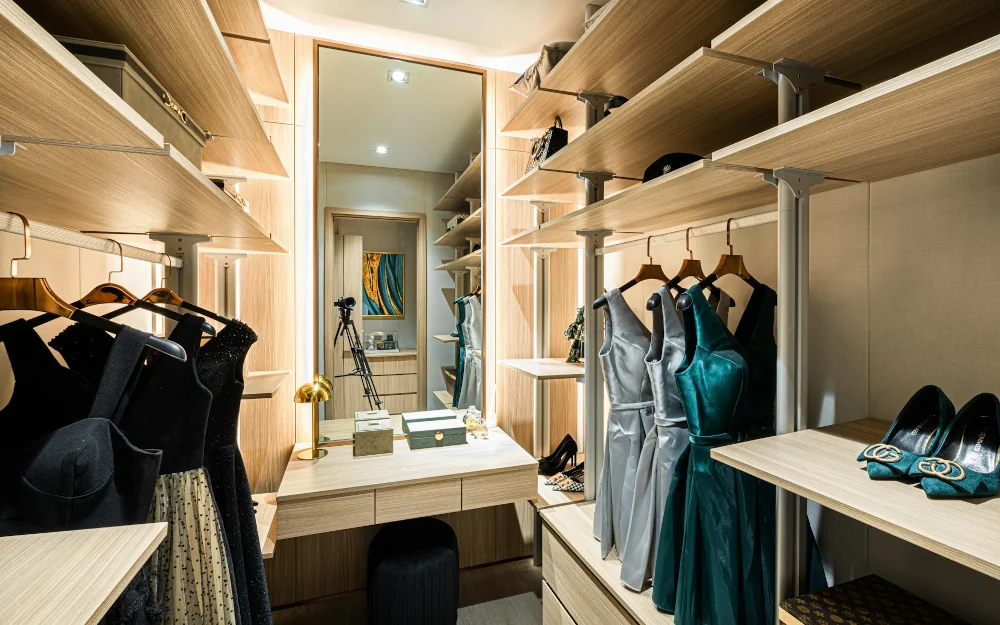
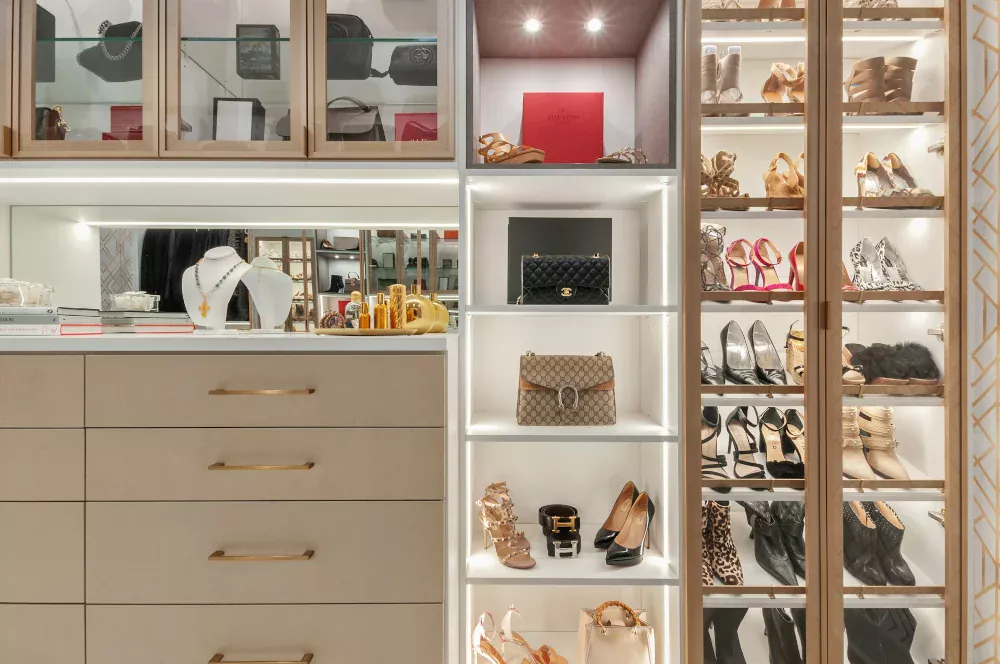
- Custom shelving: Adjustable shelves allow handbags, folded sweaters, and shoe boxes to stay neatly stacked without wasting vertical space.
- Drawer organizers: Dividers keep jewelry, belts, and watches separated so pieces don’t scratch or tangle.
- Display trays: Velvet or acrylic trays showcase rings, earrings, and bracelets while keeping them protected and easy to grab.
- Integrated lighting: Soft LED lighting highlights handbags and shoes, improves visibility in darker corners, and gives the whole space a polished, boutique-like glow.
- Dedicated accessory bars: Scarves and belts stay wrinkle-free and scannable when hung on specialized racks rather than folded into drawers.
Organize Around Your Personal Style
One of the most overlooked aspects of closet design is organizing in a way that actually reflects how you get dressed. Generic advice says to sort by category — tops with tops, bottoms with bottoms. But for fashion lovers, organizing by color, occasion, or capsule logic often works far better.
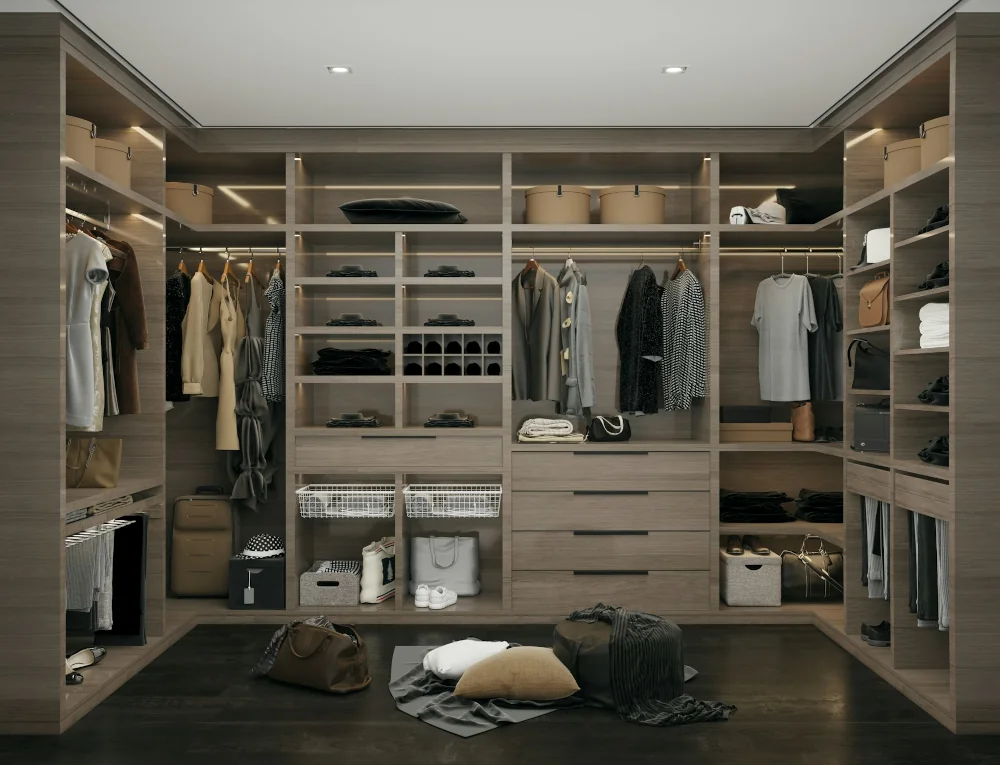
- Color organization turns your hanging rail into something that looks intentional and makes it easy to spot gaps or over-investments at a glance. Neutrals together, then warm tones, then cool tones — it sounds simple, but it changes the whole visual feel of a closet.
- Occasion zones work beautifully for anyone with a varied wardrobe. Dedicate one section to workwear, one to casual, one to occasion dressing, and one to going-out pieces. When you know exactly where to look, depending on the day’s requirements, getting dressed becomes genuinely faster.
- Capsule sections are worth considering if you love building coordinated looks. Group pieces that work together — the blazers and tailored trousers, the linen summer pieces, the evening wear — so you can see complete outfit possibilities rather than individual items. It also makes it much easier to identify what’s missing from a set.
Step-by-Step: Planning Your Closet Layout
- Assess your collection: Separate clothing from accessories and estimate how much space each category genuinely needs. Most people underestimate accessories significantly; shoes, bags, and jewelry can easily fill a third of a well-planned closet.
- Divide into zones: Create dedicated sections for garments, shoes, handbags, jewelry, and seasonal pieces. Zones prevent categories from bleeding into each other and make the space feel more considered.
- Install adjustable storage: Shelving and rods that can be repositioned make it much easier to adapt your closet as your wardrobe evolves. A fixed layout that worked two years ago may not suit your collection today.
- Prioritize visibility: Keep frequently worn pieces at eye level. Less-used items—formal wear, off-season pieces, special occasion accessories—can live higher or lower without disrupting your daily routine.
- Add lighting and mirrors: Good lighting is one of the most impactful upgrades you can make to a dressing space. It helps you see fabric texture, color accuracy, and detail — all things that matter when you’re putting together an outfit. A full-length mirror with good light on either side is the closest thing to a fitting room you can have at home.
- Protect your best pieces: Use trays, fabric-lined drawers, and dust bags for jewelry and luxury handbags. These small steps extend the life of pieces you’ve invested in and prevent the kind of damage that’s easy to avoid.
Storage Ideas for Common Fashion Accessories
| Accessory | Storage Idea | Benefit |
|---|---|---|
| Handbags | Open shelving or cubbies | Prevents crushing and keeps shapes intact |
| Jewelry | Velvet trays or divided drawers | Reduces tangling and scratches |
| Watches | Dedicated watch rolls or cases | Protects delicate mechanisms |
| Scarves | Pull-out racks or scarf hangers | Keeps fabrics wrinkle-free |
| Belts | Vertical belt racks | Makes it easy to scan options quickly |
Don’t Forget Seasonal Rotation
A closet that tries to hold everything at once will always feel crowded. Seasonal rotation is the habit that keeps a wardrobe feeling manageable year-round.
At the start of each season, move off-season pieces into storage. Think vacuum bags for bulkier knitwear, breathable garment bags for tailored pieces, and lidded boxes for shoes. What stays in the closet should be only what’s wearable right now. This also creates a natural moment to reassess: What did you reach for constantly last season, and what barely left its hanger? Those answers are useful when you’re thinking about future additions or edits.
A well-rotated wardrobe feels like a fresh start every few months. It also means your closet never becomes a source of decision fatigue; when everything in view is relevant, choosing an outfit gets easier.
Financing a Closet Upgrade
For homeowners planning larger closet renovations, such as installing built-in shelving, lighting, custom drawers, or display areas, financing can sometimes come from the equity they’ve built in their home.
Options like a home equity line of credit allow homeowners to borrow against that value and pay for improvements gradually. Some homeowners explore banks that offer lines of credit to help cover cabinetry, shelving systems, and lighting upgrades that transform a standard closet into a fully functional dressing space.
Because a revolving credit line allows funds to be drawn as needed, it can be useful during renovation projects where costs occur in stages.
A Helpful Resource for Closet Inspiration
If you’re exploring closet layouts or seeking inspiration for organizing accessories, The Container Store’s closet organization guides offer practical examples and storage solutions. Their design resources provide ideas for shelving layouts, accessory trays, and modular systems that can help turn a basic closet into a polished dressing space.
Frequently Asked Questions
I’ve tried organizing my closet before, and it always reverts to chaos. What am I doing wrong?
The most common reason closets fall back into disorder is that the storage system doesn’t match how you actually get dressed. If putting something away requires more than two steps, it won’t happen consistently, especially on busy mornings. A system that’s slightly less perfect but genuinely easy to maintain will always outperform a beautiful layout that requires effort to keep up.
Is it worth investing in custom-built-ins, or can modular systems do the same job?
Custom built-ins are worth it if you have an awkward space, unusually high ceilings, or a wardrobe collection that has very specific storage needs; they make use of every inch and tend to look more polished. That said, high-quality modular systems from brands like The Container Store or IKEA’s PAX range can perform surprisingly well when planned carefully and combined with good accessories like drawer dividers and pull-out racks. The real deciding factor is usually budget and how long you plan to stay in the space; custom makes more sense as a long-term investment in a home you own.
What is the best way to store handbags without damaging them?
Open shelving or individual cubbies are the gold standard; they keep bags upright, visible, and free from the crushing that happens when they’re stacked or hung. For structured bags, stuffing them lightly with tissue paper between uses helps maintain their shape over time, especially for leather pieces that can crease. Avoid storing handbags in plastic, which traps moisture; breathable dust bags are a much better option for anything you’re putting away for a season.
How should I organize jewelry so I can actually find what I’m looking for?
The key is visibility: Jewelry you can’t see at a glance is jewelry you forget you own. Lined trays work well for everyday pieces like rings, earrings, and bracelets because everything sits separated and in view without any extra effort. For necklaces, vertical hooks or a wall-mounted display prevent tangling far better than any drawer solution.
Do closet lights actually make a meaningful difference, or is it just aesthetic?
Lighting is genuinely functional, not just decorative; poor lighting in a closet makes it harder to read fabric colors accurately, spot damage or wear, and see what you’re actually reaching for. Soft LED strip lighting along shelf edges or inside hanging sections is one of the most cost-effective upgrades you can make, and it transforms the feel of the whole space.
How much does it cost to create a boutique-style closet?
Costs vary widely depending on size and materials. A simple upgrade using modular shelving and organizers can cost a few hundred dollars, while fully custom-built-ins with lighting, drawers, and premium finishes can range from several thousand to tens of thousands. The biggest cost drivers are cabinetry, lighting installation, and custom features like glass displays or islands.
What features make a closet look like a boutique?
Boutique-style closets prioritize visibility, symmetry, and display. Common features include open shelving for handbags, coordinated hangers, integrated lighting, velvet-lined drawers, glass-front cabinets, and clearly defined zones for different categories. The goal is to showcase items rather than hide them.
Is a walk-in closet necessary for a boutique design?
No. Even small closets can achieve a boutique feel with smart organization. Using matching storage containers, vertical shelving, drawer dividers, and proper lighting can transform a reach-in closet into a highly functional dressing space that looks curated rather than crowded.
What is the best lighting for a boutique closet?
Soft, neutral-white LED lighting is ideal because it shows fabric colors accurately without harsh glare. Strip lighting along shelves and inside hanging sections improves visibility, while overhead lighting ensures the entire space is evenly illuminated. Motion-sensor lights are also popular for convenience.
How do stylists organize clothes in professional wardrobes?
Stylists often organize by color gradient within categories, starting with light tones and moving to darker shades. This makes it easier to assemble outfits quickly and identify gaps in a wardrobe. They also keep frequently used pieces at eye level and store special-occasion items separately.
How can I maintain a boutique-style closet long term?
Consistency is key. Return items to their designated zones after use, rotate seasonal clothing regularly, and edit the wardrobe periodically to remove pieces that no longer fit your style. A system that matches your daily habits is easier to maintain than one that looks perfect but is impractical.
Should clothes be stored folded or hung?
Structured garments like blazers, dresses, and shirts should be hung to maintain shape, while knitwear and heavy sweaters are best folded to prevent stretching. Using the right storage method for each fabric type helps extend the life of your clothing.
Final Thoughts
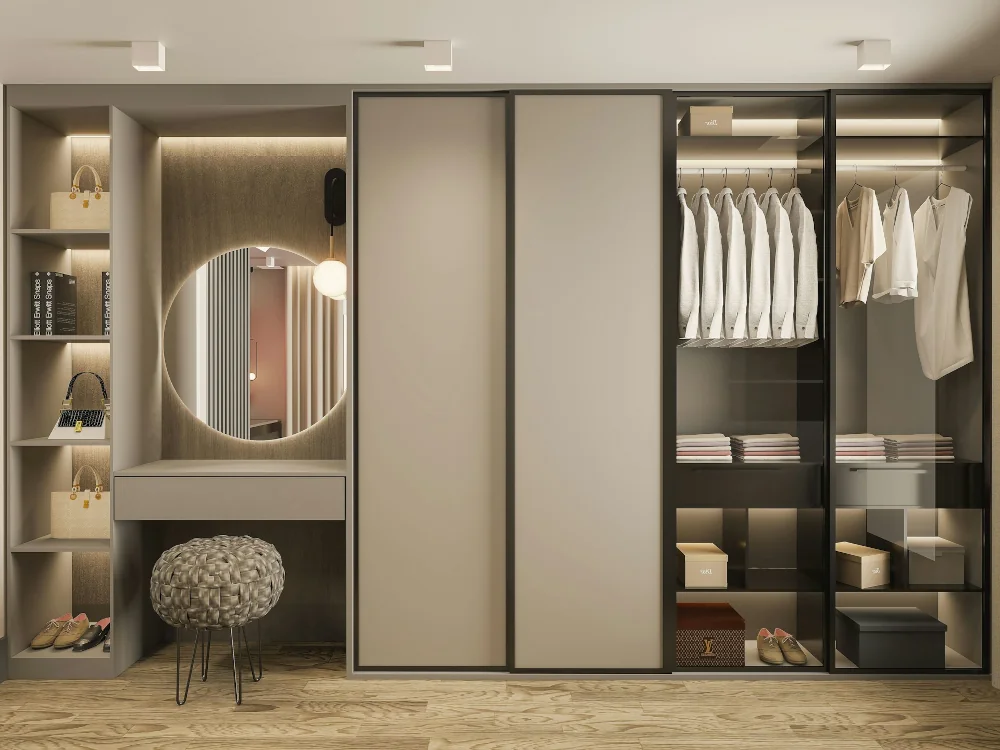
A well-designed closet is one of those home upgrades that pays you back every single day. When shelves, organizers, lighting, and layout all work together, getting dressed stops being a chore and becomes one of the small pleasures of the morning. Your pieces stay protected, your options stay visible, and the space itself becomes something worth enjoying, not just opening and closing. That’s worth designing for.

Laoutaris Recommends